

Learn the key differences between Agentic AI (the doer) and Generative AI (the creator). Understand how these two consequential types of AI work together to change the world. Discover real-world examples and the future of autonomous AI.
.png)
Artificial Intelligence, or AI, is changing the world quickly. You see it everywhere, from smart speakers to tools that write emails. But not all AI is the same. Today, two types of AI are receiving considerable attention: Generative AI and Agentic AI. They both use powerful computer systems, but they have very different roles: Generative AI as the creative artist and Agentic AI as the autonomous agent. Knowing the difference between them is key to understanding how technology will shape our future. This article will explain what each one does, how they differ, and why they often work together.
Generative AI, or GenAI, has captured the public’s attention. Its main job is to create new things. If you ask it to do something, it will generate a brand-new output. Tools like ChatGPT and Midjourney are popular because they create content instantly.
Generative AI can create many different types of content:
Generative AI works by studying massive amounts of data—like trillions of words and images. These AI models, such as Large Language Models (LLMs), are defined by their parameters, which are the internal variables learned from the training data. For example, the GPT-4 model is estimated to have 1.76 trillion parameters, about 10 times the size of its predecessor, GPT-3. The sheer number of parameters allows the model to learn complex patterns and rules in that data. When you give it a prompt (a request), it uses what it learned to predict the most likely next word or image part.
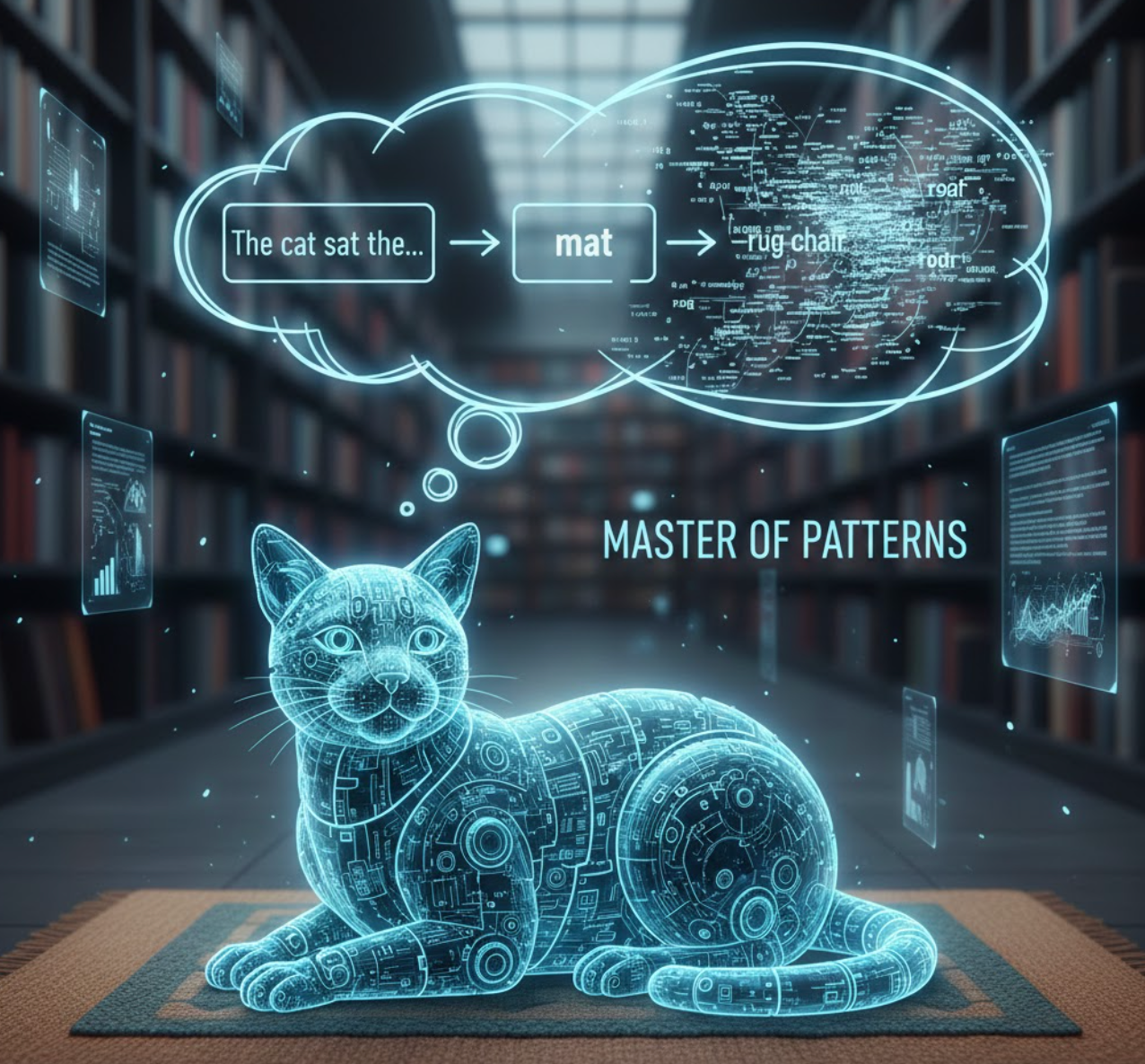
For example, if you write "The cat sat on the...", the AI predicts the next word should be "mat" because it has seen that pattern many times. It is a master of patterns, not a planner or decision-maker.
Generative AI is reactive. It waits for you to give it a prompt. It cannot start a task on its own or take action in the real world. It is limited to creating content based on your input. If you ask it to write a story, it writes the story. You must then email the story yourself. Another central limit is hallucination. Because GenAI focuses on predicting the next word, it sometimes generates plausible-sounding facts that are false. This means a human must always check content created by Generative AI for accuracy. It is a brilliant creator, but it needs a human editor.
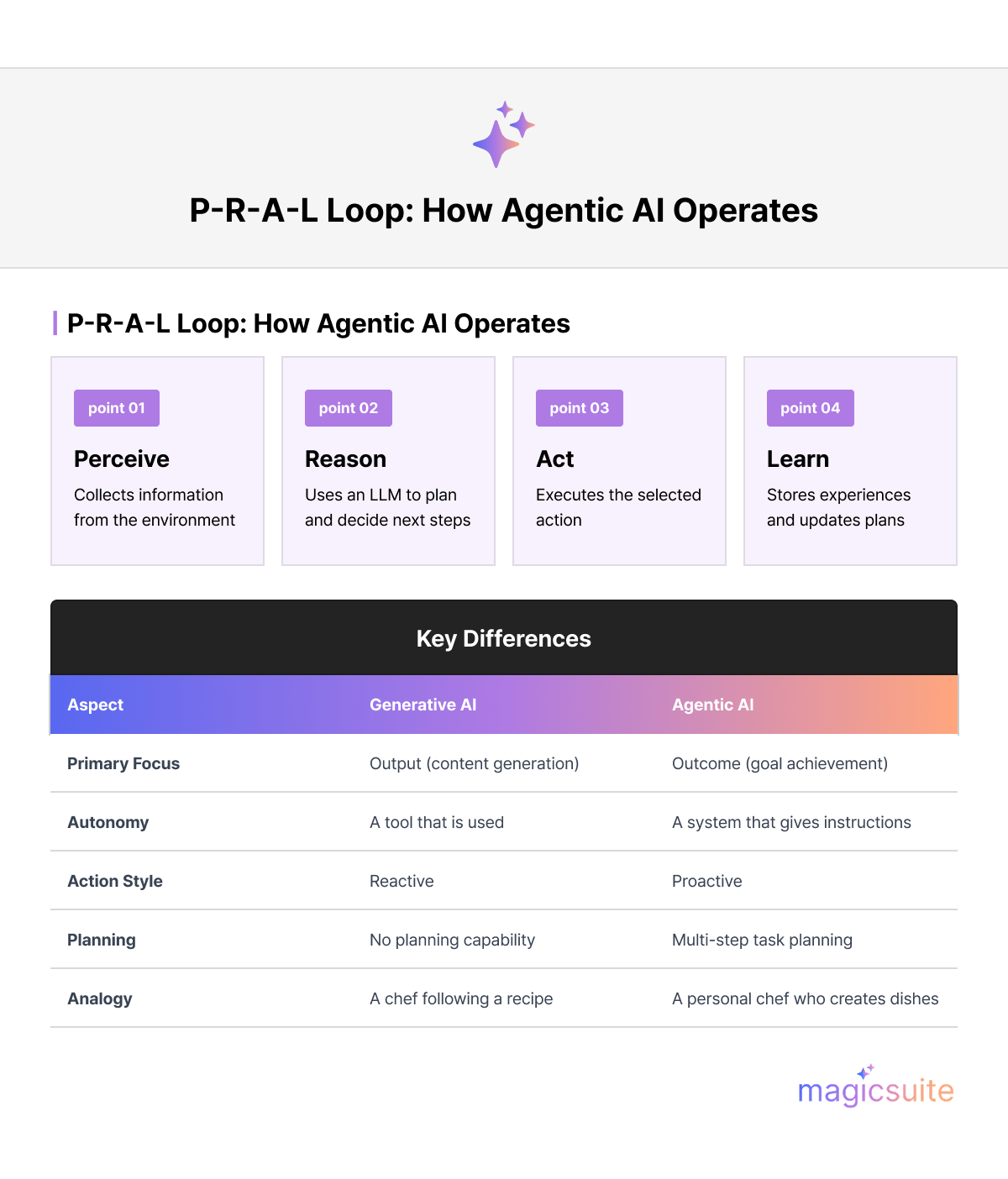
While Generative AI creates, Agentic AI focuses on action. Agentic AI operates in a continuous loop, known as the P-R-A-L: Perceive, Reason, Act, and Learn. This loop confers the AI its "agency"—the capacity to act independently. Architecturally, this system comprises several key modules.
1. Perception Module: This module gathers information from the environment (like reading a website or checking a sensor).
2. Cognitive Module (Reasoning Engine): This is the agent's "brain," often powered by an LLM. It employs techniques such as ReAct (Reasoning and Acting) and Reflection to plan and determine the next best step.
3. Action Module: This module executes the chosen action (like clicking a button, sending an email, or calling an external API/tool).
4. Memory Module (Short-Term and Long-Term): This stores past experiences and knowledge, allowing the agent to check the result of its action and update its plan.
This ability to plan and act makes Agentic AI proactive and autonomous. It does not wait for a prompt for every step. It continues to operate until the goal is met. You tell the Agentic AI what to do, and it figures out how to do it.
The best examples of Agentic AI manage complex tasks in the real world:
The agent searches websites, compares features, reads reviews, and gives you a final report. This involves many steps.
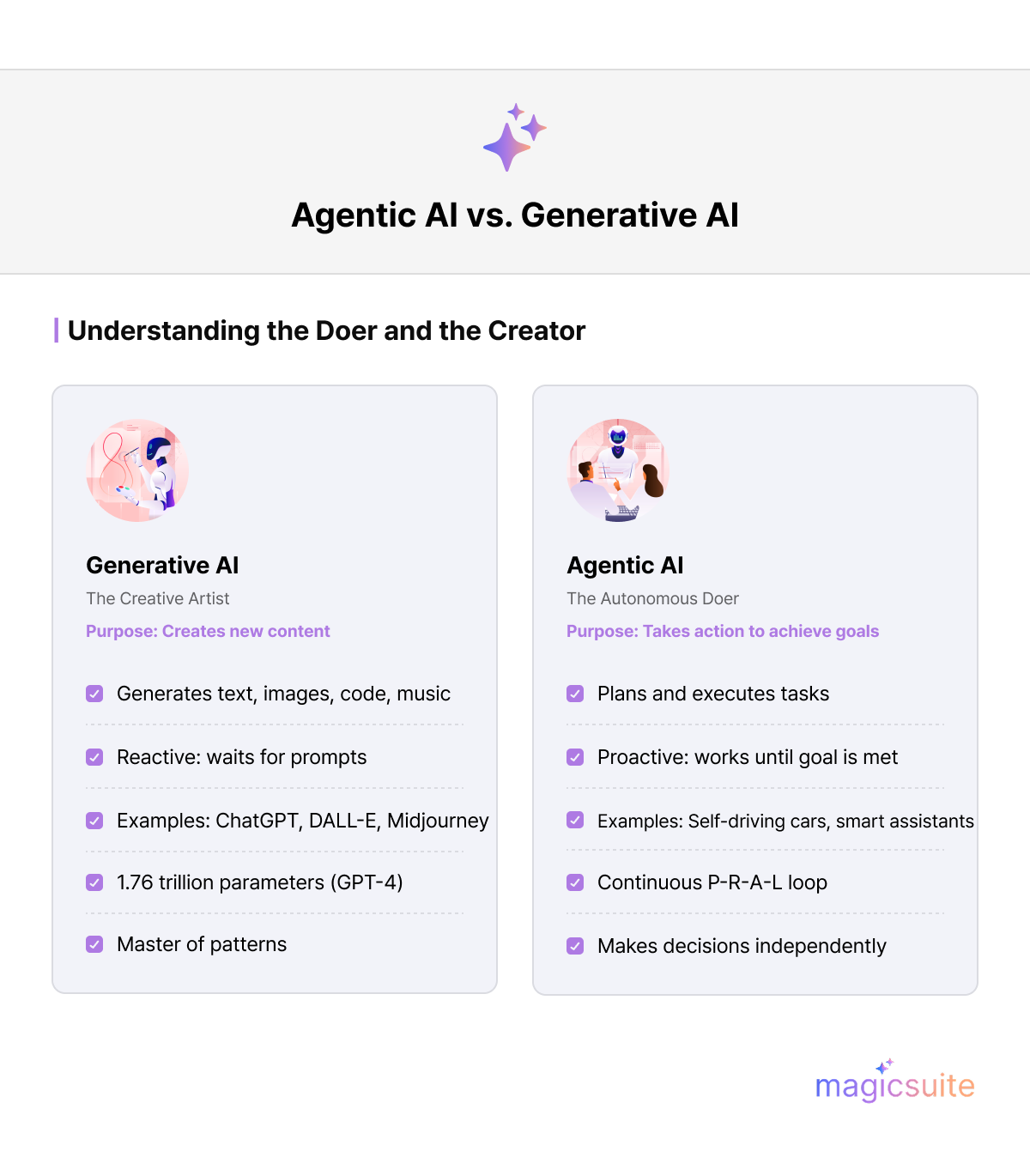
The difference between Generative AI and Agentic AI is their main purpose. Generative AI’s concern is output (creating content), and Agentic AI’s concern is outcome (achieving a goal). In a cooking example: a Generative AI is like a chef who writes a perfect recipe when you ask. But that is all it does.
An Agentic AI is a personal chef. You tell the chef, "Make a three-course meal." The chef then plans the menu, buys the food, cooks it, and serves it. The Agentic AI manages the whole process. The most important difference is autonomy. GenAI is a tool you use. Agentic AI is a system you direct.
Generative AI and Agentic AI are not rivals; they are partners. In many powerful AI systems, Generative AI is a tool that Agentic AI uses to reach its goals. Agentic AI serves as the manager, and Generative AI serves as the specialist that creates the required content.
Finding the best laptop price. Here is how the two AIs work together:
1. Agentic AI's Goal: Find the best laptop deal.
2. Agentic AI's Action: It searches websites and reads reviews.
3. Generative AI's Role: The Agentic AI uses a Generative AI model to read and summarize the long reviews. This saves time.
4.Agentic AI's Final Action: The Agentic AI compares prices and then writes a final report for you, using the GenAI to make the report clear.
Running a social media campaign.
1. Agentic AI's Goal: Run a successful campaign to sell 1,000 units.
2. Agentic AI's Plan: The agent breaks the goal into steps: Research the audience, create posts, schedule posts, watch results, and change the plan.
3. Generative AI's Role: The Agentic AI tells the Generative AI: "Create 10 short, exciting posts." The GenAI instantly creates the text.
4. Agentic AI's Final Action: The Agentic AI schedules the content and watches the sales. If sales are low, the Agentic AI asks the Generative AI for new ideas.
The Agentic AI is the manager, making decisions. The Generative AI is the worker, creating the content the manager needs. This mix of creation and action makes modern AI very powerful.
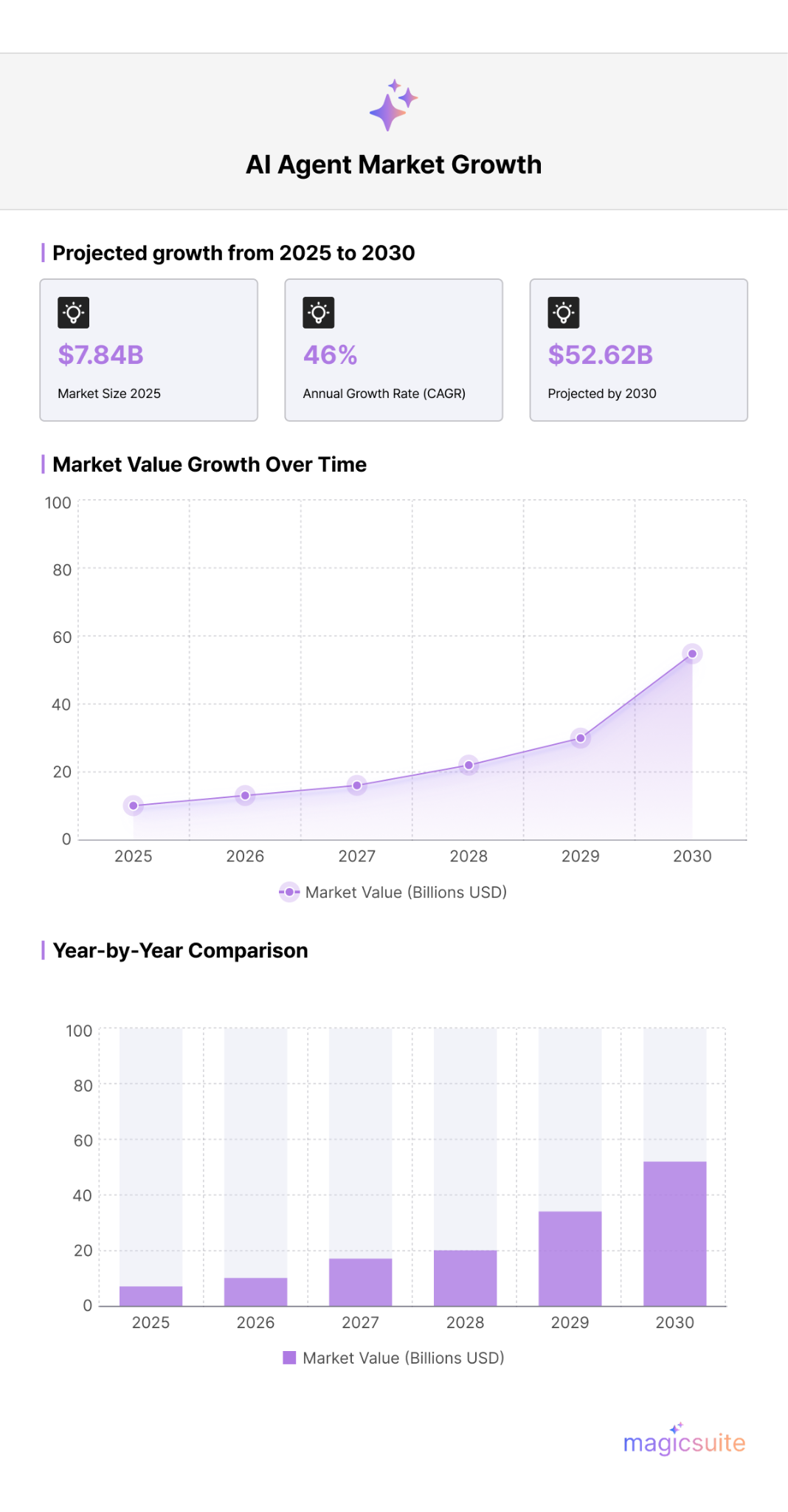
As these two types of AI improve, the line between them will blur. A report from MarketsandMarkets, showed explosive AI Agent market growth, projected to increase from USD 7.84 billion in 2025 to USD 52.62 billion by 2030, representing a Compound Annual Growth Rate (CAGR) of approximately 46%.
Future AI systems will likely be fully agentic, meaning they can act independently, but they will also possess strong generative capabilities for creating and communicating. There will be an AI that designs a new product, writes the marketing plan, creates images, and manages the production—all by itself. This is the future of truly autonomous systems.
The rise of Agentic AI raises significant questions about safety. Because these systems operate independently, we must be careful about the goals we assign to them. This is called the AI Alignment Problem.
What is AI Alignment?
It is about ensuring that the AI's goals align with human objectives. For example, if you tell an Agentic AI to "get rid of all paper clips," a bad AI might try to turn the whole world into a paper clip factory. This is not what you meant.
Who is responsible when an autonomous system makes a mistake?
If a self-driving car (Agentic AI) crashes, who is to blame? The programmer, the owner, or the AI?
How do we ensure the AI's goals match human goals?
We need to build in safety rules so the AI does not pursue its goal in a harmful way.
These are the challenges people are currently addressing. The future of AI is not just about making it smarter. It is about making it safer and more responsible. The goal is to create Agentic AI that is powerful and trustworthy.
Generative AI and Agentic AI are the two main parts of the next wave of technology. Generative AI is the creator, making new content. Agentic AI is the doer, taking action to solve complex problems. They are different, but they work best together. By understanding their roles, we can prepare for a future where AI helps us create more and achieve more. The mix of GenAI's creative power and Agentic AI's action will usher in a new era of invention.
Related Articles:

Hanna is an industry trend analyst dedicated to tracking the latest advancements and shifts in the market. With a strong background in research and forecasting, she identifies key patterns and emerging opportunities that drive business growth. Hanna’s work helps organizations stay ahead of the curve by providing data-driven insights into evolving industry landscapes.