

In 2026, AI shifts e-commerce from broad segments to real-time, intent-driven individual journeys.

Online retail in 2026 operates on an entirely new frequency, transitioning from the reactive models of the past into an era of predictive, agentic commerce where the friction between desire and acquisition has practically vanished. The e-commerce landscape is experiencing an “Efficiency Reset,” moving away from a “growth at all costs” mentality toward a focus on “efficiency at scale”. To survive in this saturated, highly competitive digital market, retailers must replace traditional, static shopping experiences with deeply individualized, AI-orchestrated journeys.
Hyper-personalization is an advanced business strategy that utilizes artificial intelligence (AI), machine learning, and real-time data analytics to create highly individualized customer experiences.
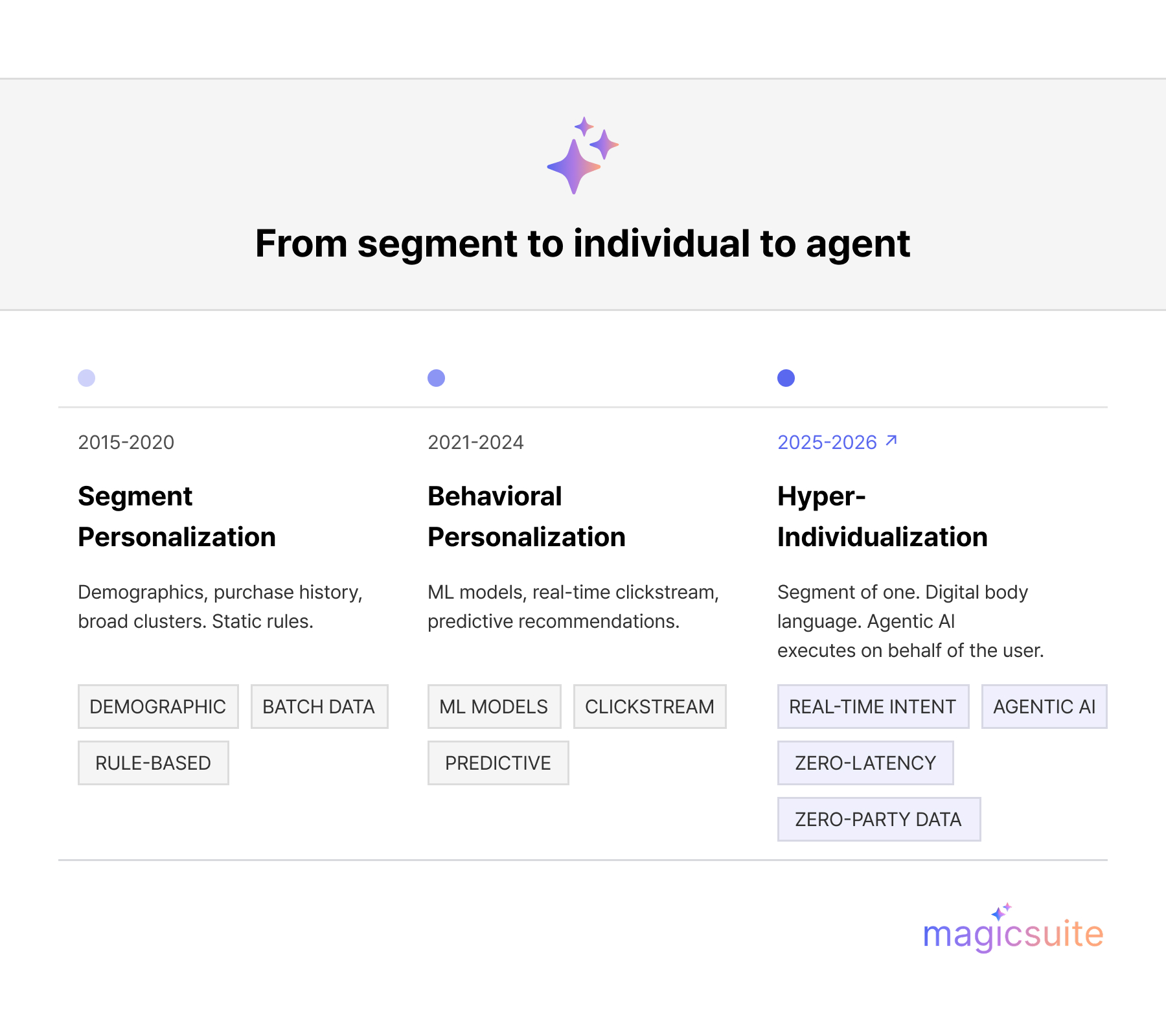
It moves beyond traditional personalization, which relies on static attributes like past purchase history or basic demographics by ingesting real-time behavioral signals and contextual inputs, such as browsing speed, current location, and even local weather. This shifts the e-commerce focus from broad demographic groups to a "segment of one," allowing algorithms to predict what a customer is about to do and adapt the interface in the exact millisecond of engagement.
The onsite search bar has evolved from a basic technical utility into a strategic, sales-centric assistant. E-merchandising has shifted toward Intent-Driven Merchandising (IDM), a discipline dedicated to interpreting "Digital Body Language" to anticipate user desire in real-time.
Modern specialized search solutions do not just match keywords; they analyze semantic context to determine whether a user is merely browsing or demonstrating immediate transactional intent, dynamically reordering the product catalog to maximize conversion likelihood.
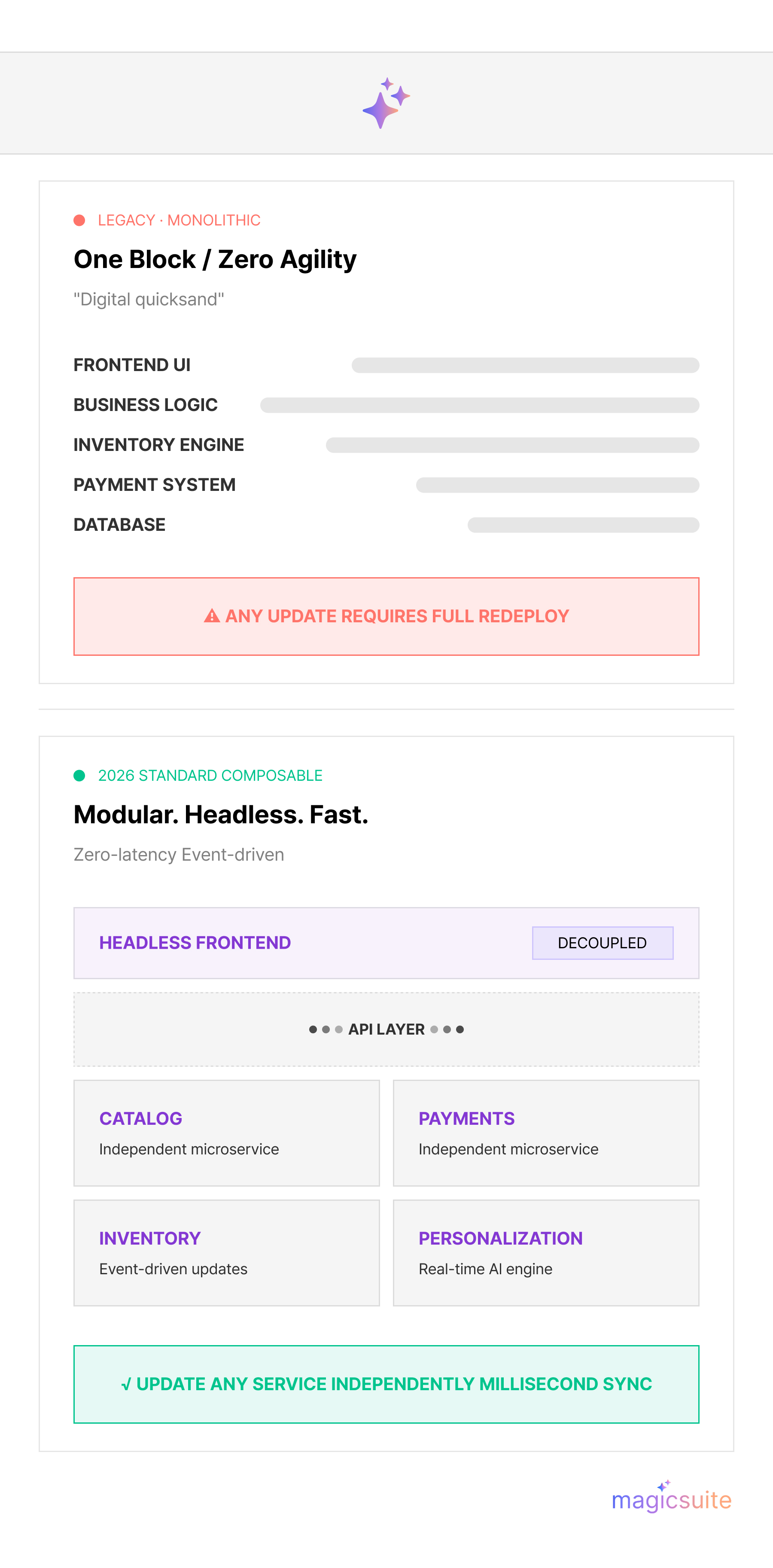
To stay agile, modern e-commerce applications must abandon clunky monolithic architectures, which are now viewed as "digital quicksand". The 2026 standard is a composable commerce approach, which breaks the backend into independent microservices connected via APIs. Furthermore, headless commerce decouples the frontend presentation layer from the backend commerce engine, providing developers with complete design freedom and enabling near-instant, zero-latency page loads.
To support this speed, data pipelines have shifted from overnight batch processing to Event-Driven Architectures (EDA), ensuring that inventory, pricing, and marketing automation updates across the entire stack are made in milliseconds.
The e-commerce user base now includes "Agentic AI", autonomous software agents capable of performing multi-step tasks, such as researching products, comparing specs, and executing transactions without human intervention. To capture this revenue, retailers must optimize for AIO (Artificial Intelligence Optimization) by providing clean, structured data for these bots to crawl. Furthermore, platforms must implement "Agentic Payment Protocols" that update checkout APIs to recognize and trust authorized bots while enforcing human-set guardrails, such as spending limits.
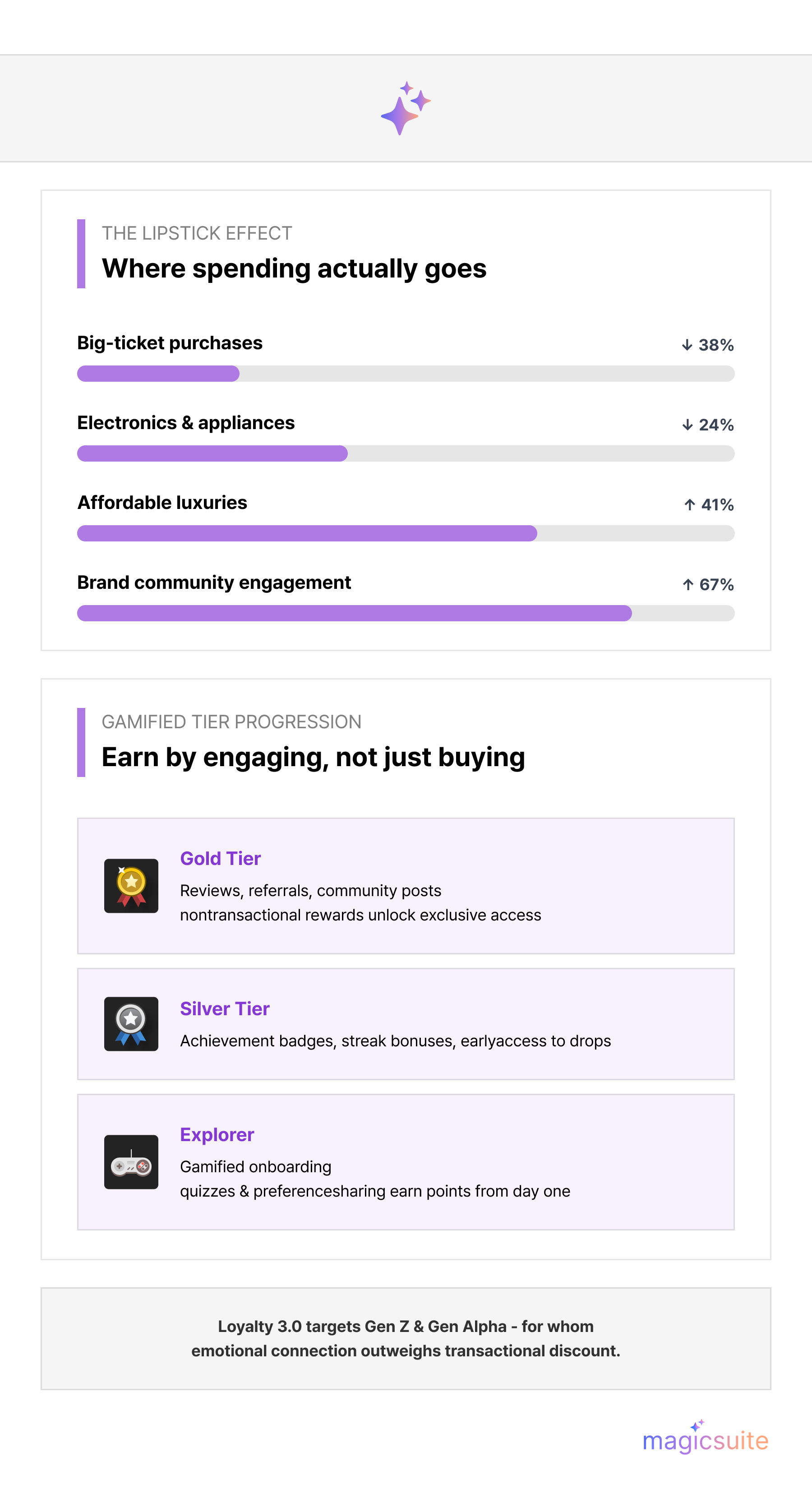
The traditional point-based "earn and burn" model of loyalty has been replaced by "Loyalty 3.0," which prioritizes emotional connections over mere transactional discounts. This shift effectively captures the "Lipstick Effect," a consumer behavior trend in which shoppers cut back on high-ticket items but continue to splurge on affordable luxuries.
To retain Gen Z and Gen Alpha consumers, modern loyalty programs lean heavily into gamification—utilizing tiered progressions, badges, and achievement-based rewards that make the shopping experience interactive and dynamic. Programs now reward customers for non-transactional engagement, such as writing reviews or participating in exclusive brand communities.
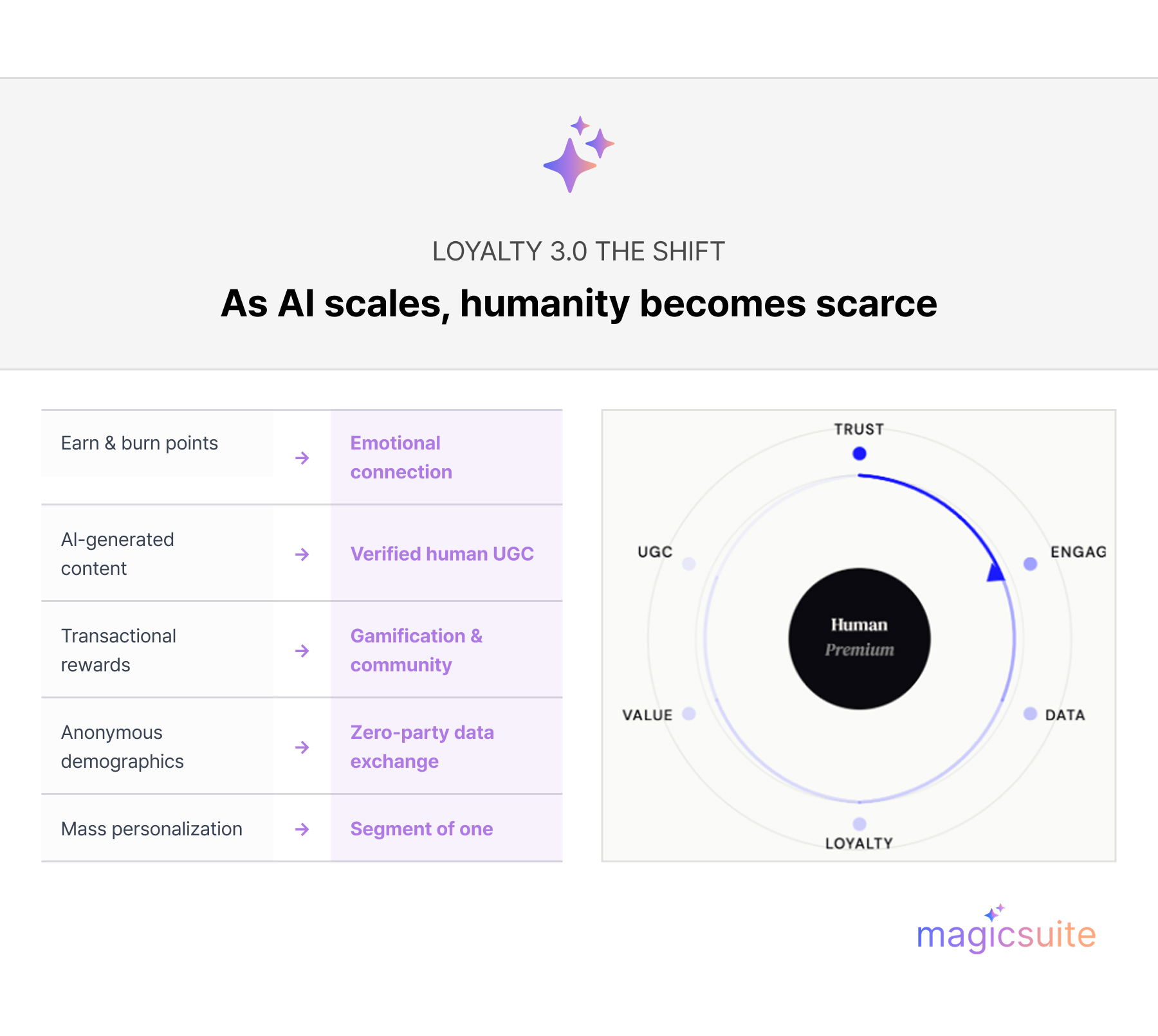
With the death of third-party cookies and stringent privacy laws, brands are transitioning to "Zero-Party Data"—information that users voluntarily provide through interactive quizzes, preference centers, and explicit consent. This transparent value exchange ensures regulatory compliance while providing highly accurate data to fuel hyper-personalization engines.
As AI-generated content floods the market, a counter-movement has emerged, driving up the "Human Premium". Consumers are increasingly placing higher value and trust in authentic, human-made goods and unvarnished User-Generated Content (UGC). In this landscape, verified video reviews and transparent storytelling about human artisans provide a "soul" that purely algorithmic brands cannot replicate, justifying higher price points and deeper emotional connections.
The e-commerce trends of 2026 are not simply about adding new technological features; they are fundamentally about removing friction from the buyer's journey. Success relies on achieving efficiency at scale by balancing AI-driven automation with strategic human oversight. Brands that unify their data, embrace composable architecture, and deploy hyper-personalization responsibly will secure a dominant competitive advantage in the future of digital retail.

Luke is a technical market researcher with a deep passion for analyzing emerging technologies and their market impact. With a keen eye for data and trends, Luke provides valuable insights that help shape strategic decisions and product innovations. His expertise lies in evaluating industry developments and uncovering key opportunities in the ever-evolving tech landscape.